The Schengen 90/180 rule,
finally made simple.

COMPLIANCE

Know exactly where you stand

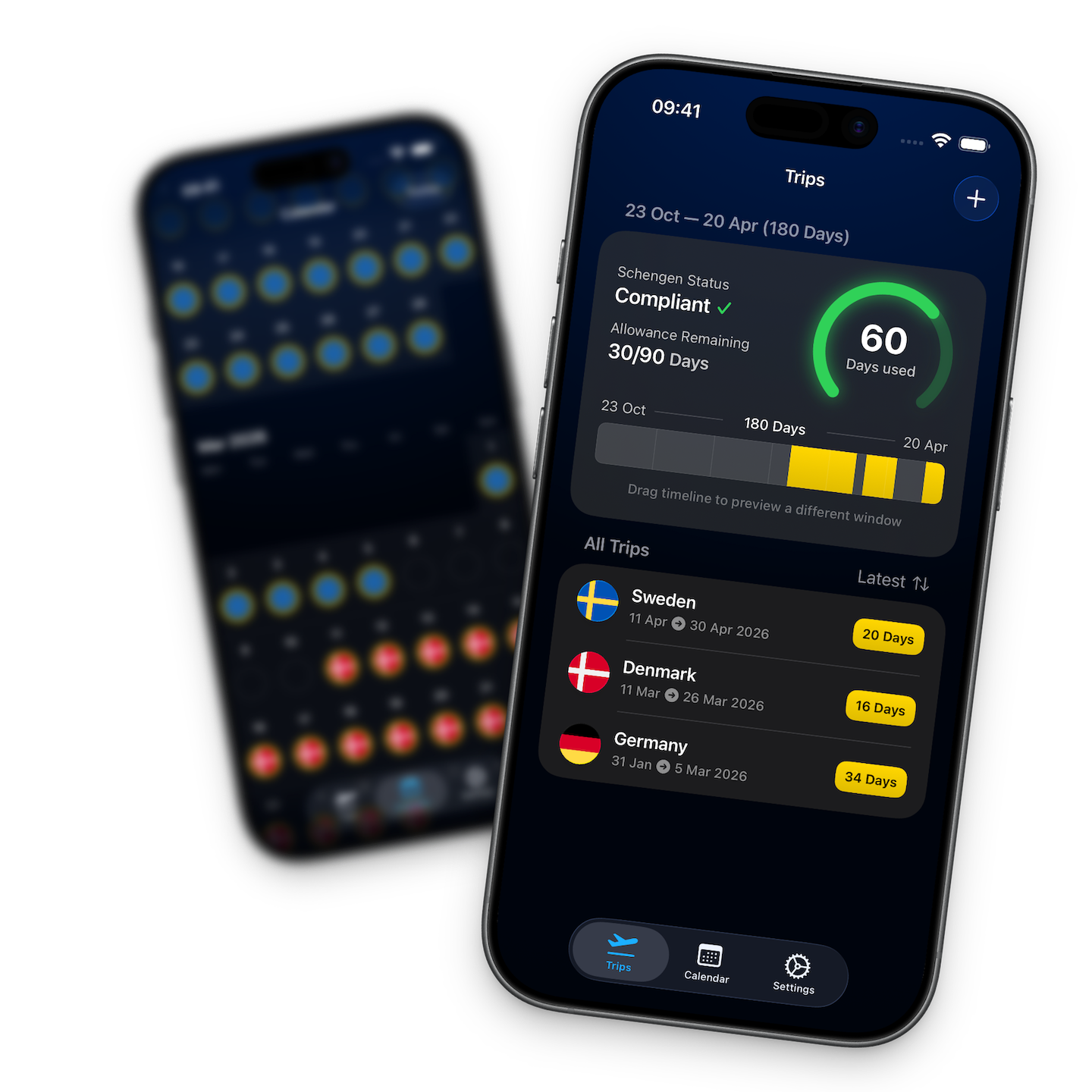
Add your trips and instantly see how many Schengen days you’ve used, how many you have left, and whether you’re still compliant. No spreadsheets, no guesswork, no second-guessing the rule.

PLAN

Check a trip before you book it

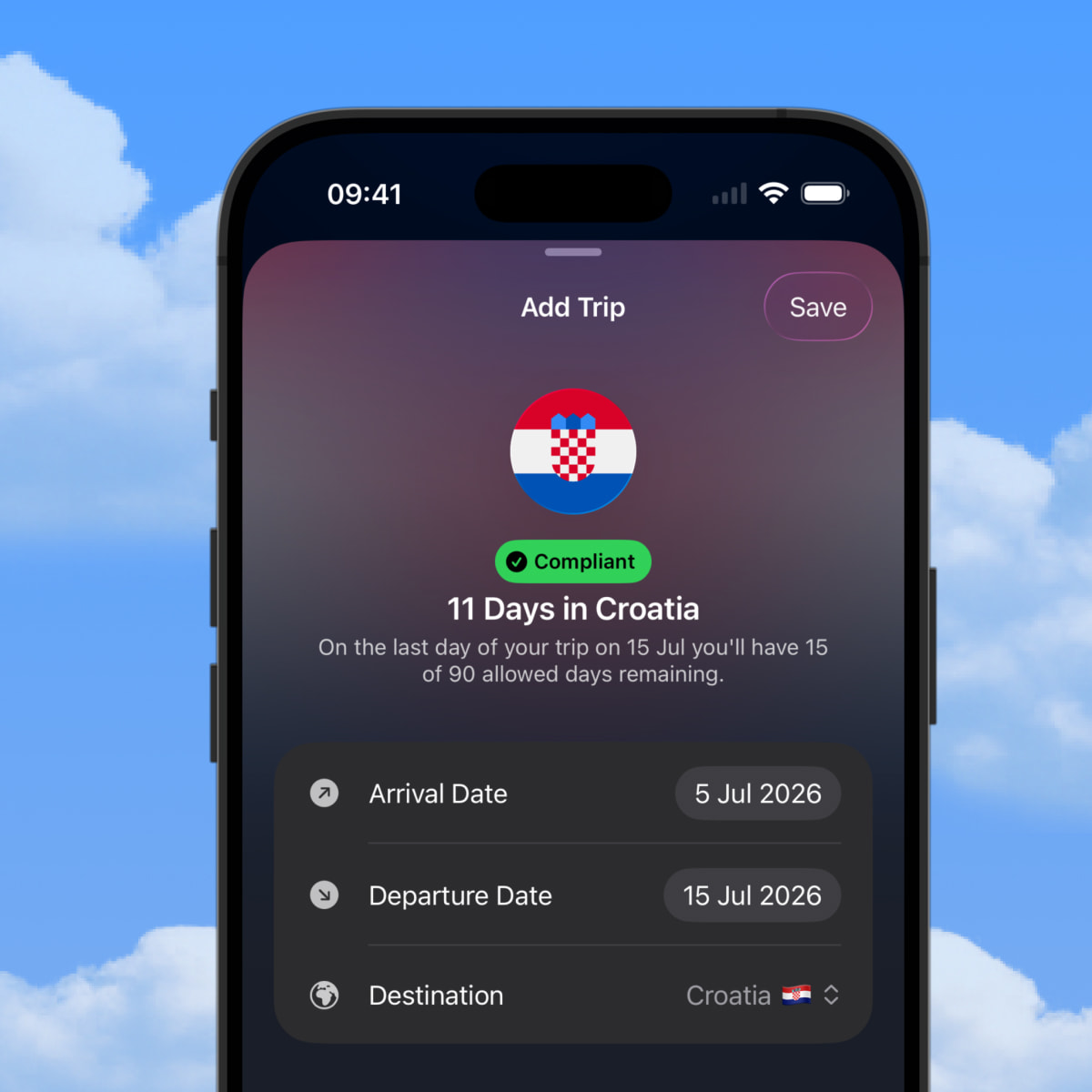
Enter a future stay and Schengen Calculator shows the impact before you travel. You can quickly see whether a trip keeps you within the 90/180-day rule, so you can plan ahead with more confidence.

CALENDAR

See every trip on one timeline

The calendar view makes your travel history easier to understand at a glance. Review past stays, spot gaps between trips, and get a clearer picture of how your days are adding up over time.

FORECAST

Catch problems before they become overstays

As you add or edit trips, your allowance updates instantly. If a stay would take you over the limit, the app makes that clear straight away, so you can adjust plans before it becomes a costly mistake.

ALERTS

Smart alerts notify you ahead of time

Set reminders in advance and get notified when you may be approaching the limit. It’s a simple way to stay ahead of the rule, especially when you have several trips planned close together.

WIDGET

Check your status in seconds

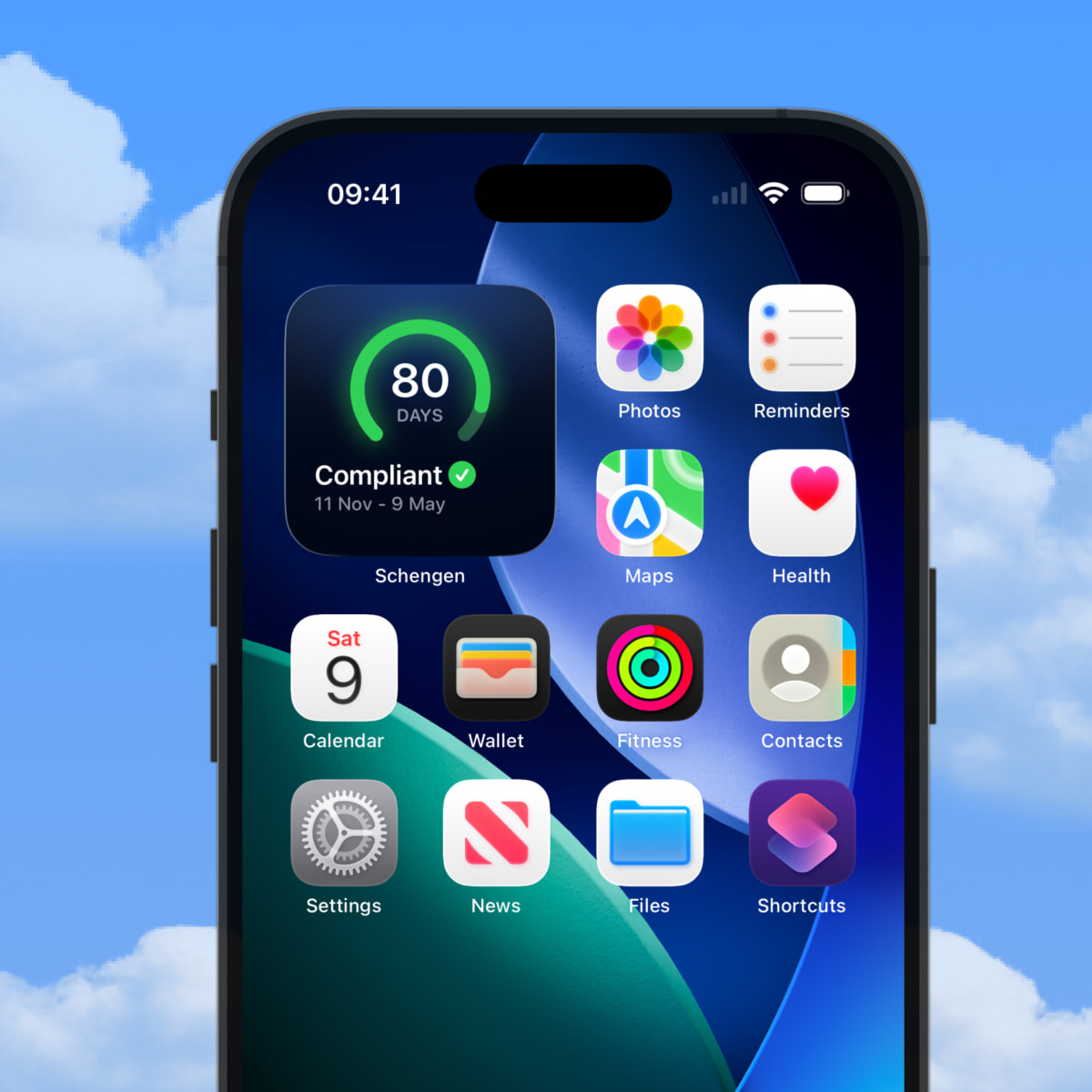
With the Home Screen widget, your remaining days are always close by. You can check your status at a glance without even opening the app.

LEARN

Clear guidance for a confusing rule

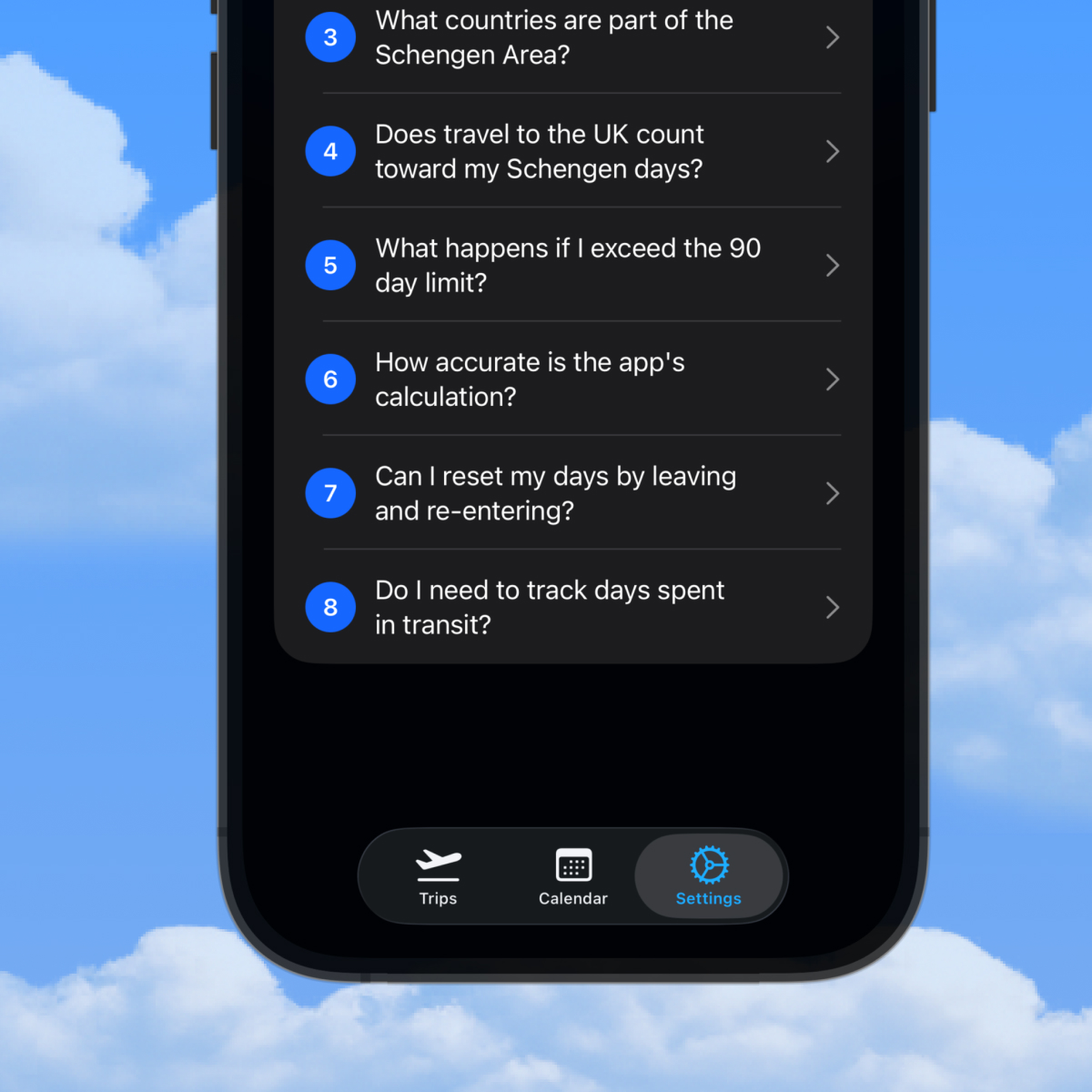
Schengen Calculator helps you make sense of the 90/180-day rule with simple explanations and practical answers. It’s designed for travellers who want clarity, not legal jargon.

Made for people who cross borders often by frequent travellers

Digital Nomads 💻
You’re working from Lisbon, Barcelona, and Amsterdam — sometimes back-to-back. The rolling window catches people off guard. Know your limits, plan your moves.

Expats & Long-Stay Visitors 🏡
Living or staying long-term near the Schengen border means every crossing counts. Stay on the right side of the rules without obsessing over spreadsheets.

Trip Planners 🗺️
Planning a multi-month European adventure? Map out your whole itinerary and know exactly how many days you can allocate to Schengen vs. non-Schengen countries.

Frequent Business Travellers ✈️
Multiple short trips across the year add up fast. What feels like a handful of meetings can push you dangerously close to your 90-day limit without realising.

Frequently asked questions

What is the Schengen 90/180-day rule?

The Schengen 90/180-day rule lets most non-EU visitors stay in the Schengen Area for up to 90 days within any rolling 180-day period. It applies to short stays for tourism, business, or family visits, and the 90 days are shared across all 29 Schengen countries combined — not 90 days per country.

The 90 days don’t have to be taken in one go. You can split them across multiple trips, but every day you spend in the Schengen Area counts toward the same allowance. Once you’ve used your days, you can’t simply re-enter — you have to wait for older trips to age out of the 180-day window before your allowance starts to recover.


Which countries does the 90/180 rule apply to?

The 90/180 rule applies across the 29 Schengen Area countries, which share a single 90-day allowance as one travel zone. Time spent in any one Schengen country counts toward your total in every other one.

The 29 members are: Austria, Belgium, Bulgaria, Croatia, Czechia, Denmark, Estonia, Finland, France, Germany, Greece, Hungary, Iceland, Italy, Latvia, Liechtenstein, Lithuania, Luxembourg, Malta, the Netherlands, Norway, Poland, Portugal, Romania, Slovakia, Slovenia, Spain, Sweden, and Switzerland. Bulgaria and Romania joined in full on 1 January 2025.

Several European countries are not part of Schengen, including Ireland, Cyprus, the United Kingdom, Albania, Serbia, Montenegro, Bosnia and Herzegovina, North Macedonia, Kosovo, Turkey, Georgia, Moldova, and Ukraine — so days spent there don’t count toward your 90 days.


How is the 180-day rolling window calculated?

The 180-day window is calculated backwards from any given date: look at the previous 180 days, count every day you spent in the Schengen Area, and that total cannot exceed 90. The window moves forward one day at a time, so your remaining allowance changes daily — even if you haven’t travelled.

In practice, this means a trip you took five months ago can still affect how many days you have today. As soon as a past travel day falls outside the 180-day lookback, it stops counting and your allowance recovers by one day. The European Commission publishes an official short-stay calculator, and Schengen Calculator runs the same maths automatically as you add or edit trips.


Do my arrival and departure days both count toward the 90 days?

Yes. Both your day of arrival in the Schengen Area and your day of departure count as full days, even if you only spend a few hours of each one inside the zone. A trip from 1 May to 10 May counts as 10 days, not 9.

This catches people out on short trips and weekend breaks, where partial days quickly add up across a year. The rule is the same at every Schengen border, and the Entry/Exit System now records these dates electronically rather than relying on a passport stamp.


Can I reset my Schengen days by leaving for a few days?

No. Leaving the Schengen Area does not reset your 90-day allowance. The 180-day window is rolling, so your remaining days only increase as older travel days drop out of the lookback period.

For example, if you’ve spent 90 consecutive days in Schengen, taking a week in the UK or Turkey doesn’t earn you another 90 days. You’ll need to wait until enough of your earlier travel days have aged past the 180-day mark before you can re-enter — which usually means months outside the area, not days. This is the most common misconception about the rule, and the one most likely to lead to an accidental overstay.


What happens if I overstay my 90 days in the Schengen Area?

Overstaying the Schengen 90-day limit can result in fines, deportation, an entry ban of up to several years, and a record on your immigration file that may affect future visas to Europe and beyond. Penalties vary by country and scale with how long you overstayed.

Until 2026, overstays were partly tracked through manual passport stamps, which were occasionally missed. The Entry/Exit System (EES), now fully operational across the Schengen Area, automatically flags overstayers, making accidental overstays far easier for border officers to detect on your next entry attempt — often years later.


How does the 90/180 rule apply to UK travellers after Brexit?

Since the end of the Brexit transition period on 31 December 2020, UK passport holders are treated as non-EU “third-country nationals” in the Schengen Area and are subject to the 90/180-day rule. Before Brexit, UK citizens could live, work, or stay in EU/Schengen countries without limit; now, short visits are capped at 90 days in any rolling 180-day period.

Time spent in Ireland doesn’t count because Ireland isn’t a Schengen member and continues to share a Common Travel Area with the UK. If you want to stay longer than 90 days in a single Schengen country — for work, study, retirement, or extended visits — you’ll need a national long-stay visa or residence permit issued by that country. UK travellers are also now subject to EES, and will need an ETIAS authorisation once that system launches.


What is the EU Entry/Exit System (EES)?

The Entry/Exit System (EES) is the EU’s automated border system that digitally records every entry and exit of non-EU short-stay travellers across the Schengen Area. It replaces manual passport stamps with electronic records and biometric data — a facial image and fingerprints — collected the first time you cross an external Schengen border.

EES began its phased rollout on 12 October 2025 and became fully operational on 10 April 2026 across all 29 Schengen countries. Once you’re registered, your biometrics are valid for three years (or until you renew your passport, whichever comes first), so future crossings should be quicker. EES applies to UK, US, Canadian, Australian, and other visa-exempt travellers, as well as visa holders. Children under 12 are exempt from fingerprinting but are still registered.


What is ETIAS, and when do I need one?

ETIAS — the European Travel Information and Authorisation System — is a pre-travel authorisation that visa-exempt non-EU citizens will need before entering the Schengen Area. It works much like the US ESTA or the UK ETA: you apply online before your trip, pay €20 (free for under-18s and over-70s), and receive an authorisation linked to your passport.

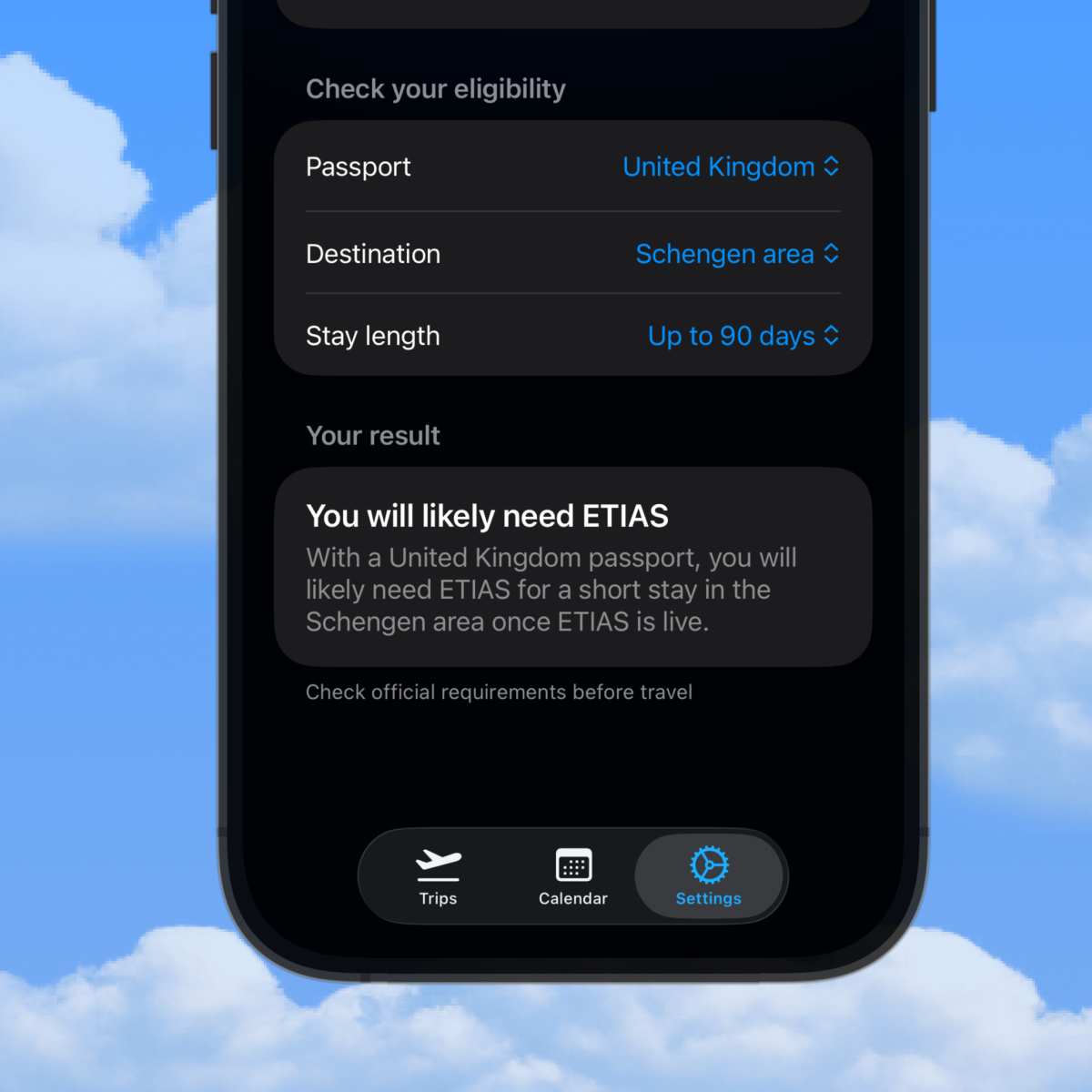
ETIAS is expected to launch in late 2026; the European Commission has not yet set a firm date, and you cannot apply yet. Once live, an ETIAS will be valid for three years or until your passport expires, and will allow multiple short stays of up to 90 days in any 180-day period. ETIAS is not a visa and does not change the 90/180 rule — it sits on top of it.


How does Schengen Calculator work out my remaining days?

Schengen Calculator uses the same rolling 90/180-day calculation that border officers and the European Commission’s official tool use. You add each trip with its entry and exit dates, and the app counts every day spent in the Schengen Area within the moving 180-day window — including arrival and departure days.

Because the window shifts forward one day at a time, the app updates your remaining allowance automatically. You can also enter a future trip to see its impact before you book, set alerts as you approach the limit, and view your travel history on a calendar to spot patterns and gaps at a glance.


Where is my trip data stored, and is it private?

Your trip data is stored securely and privately in your own iCloud account. Schengen Calculator does not run a server-side database of your travel history, and your trips are never shared with third parties.

This means your data syncs across your own Apple devices via iCloud and is protected by Apple’s built-in security. You stay in control: if you delete a trip in the app — or delete the app altogether — your data goes with it.


Trusted by frequent travellers

See what Schengen travellers are saying.

“Perfect for keeping track of everything in one place. No more messing around with spreadsheets and random notes on my phone.

“As a heavy Schengen traveller it is important to me to track my days in the Schengen zone. This app is the perfect solution simple to use with a well designed interface.”

“I’ve tried a few different apps but this is the nicest one out of all of them. It just works really well so it’s ideal for me.”